What the court has decided
An Order Nisi is the order in which the Court of King's Bench of Alberta confirms that the mortgage is in default, confirms the amount owing, and sets a redemption period — a window in which the amount owing can be paid and the foreclosure brought to an end.
It is a significant step and it is not the end of the process. Title has not changed. The home has not been sold. A sale still has to happen and still has to be confirmed by the court afterwards.
The redemption period
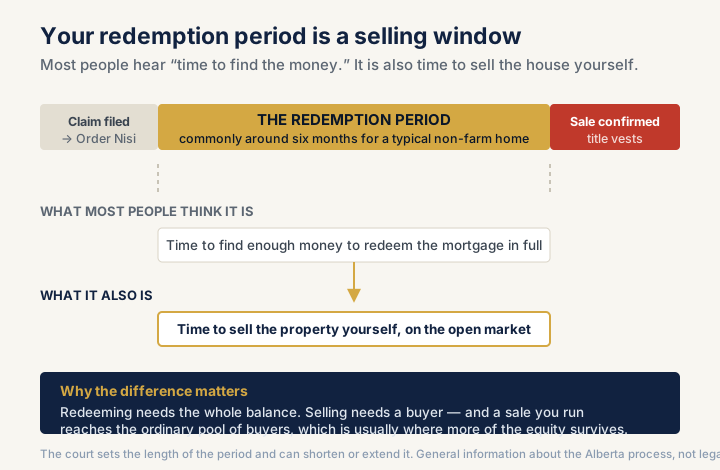
The length is set by the court and is discretionary rather than fixed, but it is commonly around six months for an ordinary, non-farm home. Your order states what applies in your matter, and that document governs — not a general figure from any website, including this one.
What that window is genuinely for:
- Redeeming — paying the amount the order specifies, usually by refinancing or by clearing the arrears and costs. The realistic routes are here.
- Selling the home yourself, which is the option most people do not realise survives this stage. It does, and the reason it matters is here.
Why selling during redemption is worth understanding
A sale you arrange is prepared, priced and marketed to create competition. A court-supervised sale is built to be defensible rather than to maximise the price, and buyers price in what they can see about the circumstances.
That gap is not the lender's money. Once the mortgage, the arrears and the costs are paid, the surplus is yours, so a lower sale price comes directly out of your side of the ledger. Work out your own number here — it decides whether you are protecting equity or managing a shortfall, and those are completely different plans.
What happens if the period runs out
The lender can apply to have the property listed and sold, and a later order confirms the sale and vests title in the buyer. That is the point at which ownership actually changes — not at the Order Nisi. The remaining sequence is here.
Where legal advice belongs
Anything about the terms of your order, extending the period, or defending the matter is legal advice, and it should come from a lawyer. Legal Aid Alberta and duty counsel are the starting points if cost is the obstacle. Anything about bankruptcy or a consumer proposal belongs with a Licensed Insolvency Trustee. We do marketing and education, and the licensed work is done by licensed people.
Free help in Alberta
These are independent organisations. We are not connected to them and we are not paid to list them.
- Calgary Legal Guidance — 403-234-9266. free legal help for low-income Albertans — office hours Monday to Friday, 9am to 4pm; phone to ask about clinic times
- Court Assistance Program (KB Amicus). free 30-minute volunteer-lawyer consults for self-represented civil litigants, walk-in at the Calgary Courts Centre
- Basic Needs Fund — call 211. emergency funds for rent arrears and eviction prevention
- Legal Aid Alberta — 1-866-845-3425
- Money Mentors — 1-888-294-0076. Alberta non-profit credit counselling, and the Orderly Payment of Debts programme — an Alberta-only court-ordered consolidation option
- 211 Alberta — 211. connects you to local financial and housing supports
If a consumer proposal or bankruptcy might be part of your situation, speak to a Licensed Insolvency Trustee. They are the only people licensed to advise on it.